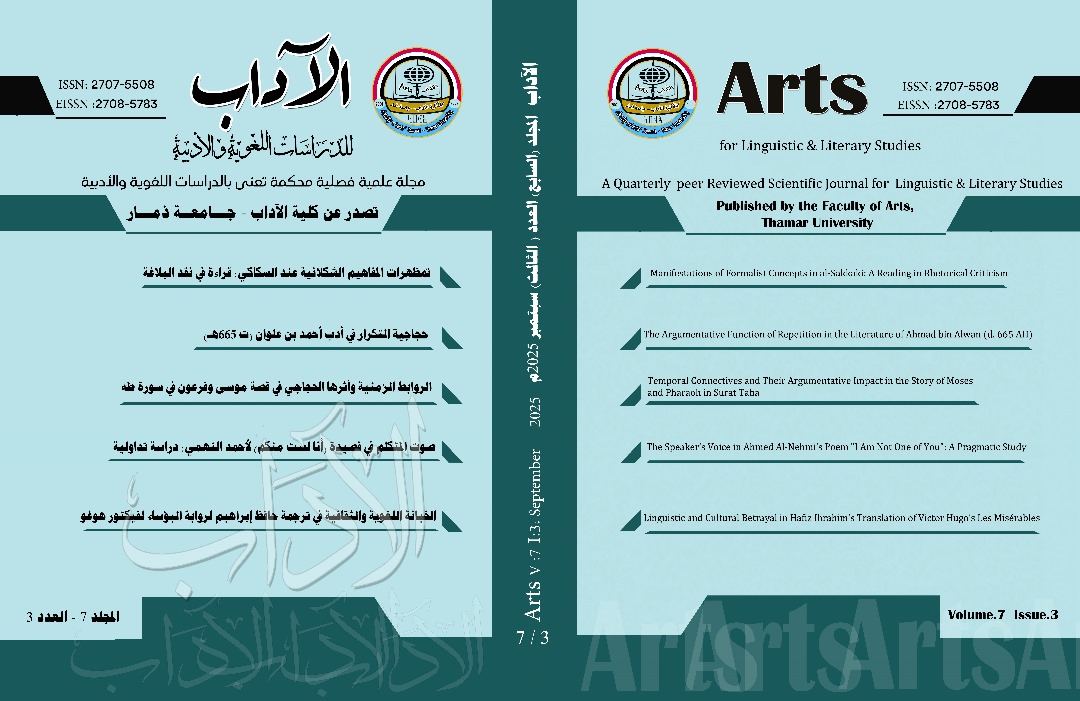
Temporal Connectives and Their Argumentative Impact in the Story of Moses and Pharaoh in Surat Taha
DOI:
https://doi.org/10.53286/arts.v7i3.2704Keywords:
Temporal Connectives, Quranic Argumentation, Quranic Narrative, Cohesive Devices, Persuasive EffectAbstract
This study examines the argumentative function of temporal connectives in constructing the rhetorical structure of the Quranic discourse, focusing on the story of Moses and Pharaoh in Surat Taha as a model of the conflict between truth and falsehood within a tightly ordered temporal sequence. Temporal connectives such as idha, idh, lamma, fa, thumma, and ḥatta are analyzed not only as narrative devices for organizing events but also as effective mechanisms in shaping Quranic argumentation and reinforcing persuasive logic. Through a detailed analysis of the text, the research demonstrates how these connectives contribute to sequencing events, intensifying conflict, and guiding the audience toward understanding truths and internalizing arguments. By employing an argumentative approach, the study uncovers the deeper semantic functions of these tools, showing that they transcend mere chronological markers to become instruments of rhetorical pressure and strategic direction that highlight the logic of the discourse and enhance its persuasive impact, thereby reflecting the coherence between temporal structuring and the divine message’s communicative purpose.
Downloads
References
الأزهري، خ. (2000). شرح التصريح (ط.1). دار الكتب العلمية.
الأشموني، ع. (1998). شرح الأشموني على ألفية ابن مالك (ط.1). دار الكتب العلمية.
بصل، م. والعكش، أ. (2018). نظرية الحجاج اللغوي عند ديكرو وإنسكومبر، مجلة جامعة تشرين للبحوث والدراسات العلمية، سلسلة الآداب والعلوم الإنسانية، 40(4)، 185-197.
الجرجاني، ع. (1983). التعريفات (ط.1). دار الكتب العلمية.
أبو حيان، م. (1420). البحر المحيط (صدقي محمد جميل، تحقيق). دار الفكر.
الرازي، م. (1420). مفاتيح الغيب (ط.3). دار إحياء التراث العربي.
الراضي، ر. (2010). الحجاجيات اللسانية، مقال ضمن كتاب: الحجاج؛ مفهومه ومجالاته (ط.1). (حافظ اسماعيلي علوي، تحرير). عالم الكتاب.
الزبيدي، م. (د.ت). تاج العروس (ط.1). دار الهداية.
الزجاجي، ع. (1984). حروف المعاني والصفات (علي توفيق الحمد، تحقيق). مؤسسة الرسالة.
الزركشي، أبو عبد الله، البرهان في علوم القرآن (محمد أبو الفضل إبراهيم، تحقيق). دار إحياء الكتب العربية.
الزمخشري، أ. (1957). الكشاف عن حقائق غوامض التنزيل (ط.3). دار الكتاب العربي.
أبو زيد، ف. (2007). الروابط النصية: دراسة في الاتساق النصي. دار غريب.
السامرائي، ف. (2000). معاني النحو، ط1، دار الطباعة للنشر والتوزيع.
سيبويه، ع. (1988). الكتاب (عبد السلام هارون، تحقيق؛ ط.3). مكتبة الخانجي.
الشهري، ع. (2004). استراتجيات الخطاب مقاربة لغوية تداولية (ط.1). دار الكتاب الجديد.
الطروس، م. (2005). النظرية الحجاجية (ط.1). دار الثقافة.
ابن عاشور، م. (1984). التحرير والتنوير. الدار التونسية للنشر.
العزاوي، أ. (2006). اللغة والحجاج (ط.1). منتديات سور الأزبكية.
ابن فارس، أ. (1979). معجم مقاييس اللغة (عبد السلام محمد هارون، تحقيق). دار الفكر.
القرطبي، أ. (1964). الجامع لأحكام القرآن (تفسير القرطبي) (أحمد البردوني، وإبراهيم أطفيش، تحقيق؛ ط.2). دار الكتب المصرية.
القشيري، ع. (د.ت). لطائف الإشارات (ط.3). الهيئة المصرية العامة للكتاب.
المبخوت، ش. (د.ت). نظرية الحجاج في اللغة، من أهم نظريات الحجاج في التقاليد الغربية من أرسطو إلى يومنا (حمودي صمود، تحرير). كلية الآدب جامعة منوبة.
المرادي، أ. (1992). الجنى الداني في حروف المعاني (فخر الدين قباوة، ومحمد نديم فاضل، تحقيق). دار الكتب العلمية.
ابن منظور، م. (1414). لسان العرب (ط.3). دار صادر.
ناجح، ع. (2011). العوامل الحجاجية في اللغة العربية (ط.1). مكتبة علاء الدين.
النحاس، أ. (1421). إعراب القرآن (ط.1). دار الكتب العلمية.
ابن هشام، ع. (د.ت). أوضح المسالك إلى ألفية ابن مالك (يوسف الشيخ محمد البقاعي، تحقيق). دار الفكر.
ابن هشام، ع. (1985). مغني اللبيب عن كتب الأعاريب (مازن المبارك، ومحمد علي حمد الله، تحقيق؛ ط.6). دار الفكر.
ابن يعيش، ي. (2001). شرح المفصل (ط.1). دار الكتب العلمية.
References
Al-Azhari, K. (2000). Sharh al-Tasreeh (1st ed.). Dar al-Kutub al-‘Ilmiyyah.
Al-Ashmouni, A. (1998). Sharh al-Ashmouni ‘ala Alfiyyat Ibn Malik (1st ed.). Dar al-Kutub al-‘Ilmiyyah.
Basal, M., & Al-‘Akash, A. (2018). The theory of linguistic argumentation in Ducrot and Anscombre. Tishreen University Journal for Research and Scientific Studies, Series of Arts and Humanities, 40(4), 185–197.
Al-Jurjani, A. (1983). Al-Ta‘rifat (1st ed.). Dar al-Kutub al-‘Ilmiyyah.
Hamdawi, J. (2013). Argumentation theories: A reading in contemporary theories. Al-Manahij Journal, (70), 69, 73.
Abu Hayyan, M. (1420 AH). Al-Bahr al-Muhit (S. M. Jamil, Ed.). Dar al-Fikr.
Al-Razi, M. (1420 AH). Mafatih al-Ghayb (3rd ed.). Dar Ihya’ al-Turath al-‘Arabi.
Al-Radhi, R. (2010). Linguistic argumentation. In H. Ismaili ‘Alawi (Ed.), Al-Hijaj: Mafhūmuhu wa Majalatuhu (1st ed.). ‘Alam al-Kitab.
Al-Zabidi, M. (n.d.). Taj al-‘Arus (1st ed.). Dar al-Hidaya.
Al-Zajjaji, A. (1984). Huruf al-Ma‘ani wa al-Sifat (A. T. al-Hamad, Ed.). Mu’assasat al-Risalah.
Al-Zarkashi, A. (n.d.). Al-Burhan fi ‘Ulum al-Qur’an (M. A. Ibrahim, Ed.). Dar Ihya’ al-Kutub al-‘Arabiyyah.
Al-Zamakhshari, A. (1957). Al-Kashshaf ‘an Haqa’iq Ghawamid al-Tanzil (3rd ed.). Dar al-Kitab al-‘Arabi.
Abu Zayd, F. (2007). Al-Rawabit al-Nassiyya: Dirasah fi al-Ittisāq al-Nassi. Dar Gharib.
Al-Samarrai, F. (2000). Ma‘ani al-Nahw (1st ed.). Dar al-Tiba‘ah li al-Nashr wa al-Tawzi‘.
Sibawayh, A. (1988). Al-Kitab (A. H. Harun, Ed.; 3rd ed.). Maktabat al-Khanji.
Al-Shahri, A. (2004). Istratijiyyat al-Khitab: Muqarabah Lughawiyyah Tadawuliyyah (1st ed.). Dar al-Kitab al-Jadid.
Al-Tarus, M. (2005). Al-Nazariyyah al-Hijajiyyah (1st ed.). Dar al-Thaqafa.
Ibn ‘Ashur, M. (1984). Al-Tahrir wa al-Tanwir. Al-Dar al-Tunisiyyah li al-Nashr.
Al-‘Izawi, A. (2006). Al-Lughah wa al-Hijaj (1st ed.). Muntadayat Sur al-Azbikiyyah.
Ibn Faris, A. (1979). Mu‘jam Maqayis al-Lughah (A. H. Harun, Ed.). Dar al-Fikr.
Al-Qurtubi, A. (1964). Al-Jami‘ li Ahkam al-Qur’an (Tafsir al-Qurtubi) (A. al-Barduni & I. Atfiyash, Eds.; 2nd ed.). Dar al-Kutub al-Misriyyah.
Al-Qushayri, A. (n.d.). Lata’if al-Isharat (3rd ed.). Egyptian General Book Authority.
Al-Mabkhout, S. (n.d.). Nazariyyat al-Hijaj fi al-Lughah: Min Aham Nazariyyat al-Hijaj fi al-Taqalid al-Gharbiyyah min Aristu ila Yawmuna (H. Samoud, Ed.). Faculty of Letters, University of Manouba.
Al-Muradi, A. (1992). Al-Jana al-Dani fi Huruf al-Ma‘ani (F. Qabawa & M. N. Fadil, Eds.). Dar al-Kutub al-‘Ilmiyyah.
Ibn Manzur, M. (1414 AH). Lisan al-‘Arab (3rd ed.). Dar Sadir.
Najeh, A. (2011). Al-‘Awamil al-Hijajiyyah fi al-Lughah al-‘Arabiyyah (1st ed.). Maktabat ‘Ala’ al-Din.
Al-Nahhas, A. (1421 AH). I‘rab al-Qur’an (1st ed.). Dar al-Kutub al-‘Ilmiyyah.
Ibn Hisham, A. (n.d.). Awḍah al-Masalik ila Alfiyyat Ibn Malik (Y. al-Biqai, Ed.). Dar al-Fikr.
Ibn Hisham, A. (1985). Mughni al-Labib ‘an Kutub al-A‘arib (M. al-Mubarak & M. A. Hamdallah, Eds.; 6th ed.). Dar al-Fikr.
Ibn Ya‘ish, Y. (2001). Sharh al-Mufassal (1st ed.). Dar al-Kutub al-‘Ilmiyyah.
Downloads
Published
Issue
Section
License
Copyright (c) 2025 د.غالية المسند

This work is licensed under a Creative Commons Attribution 4.0 International License.
Copyright and Licensing
copyright is retained by the authors. Articles are licensed under an open access Creative Commons CC BY 4.0 license, meaning that anyone may download and read the paper for free. In addition, the article may be reused and quoted provided that the original published version is cited. These conditions allow for maximum use and exposure of the work.
How to Cite