
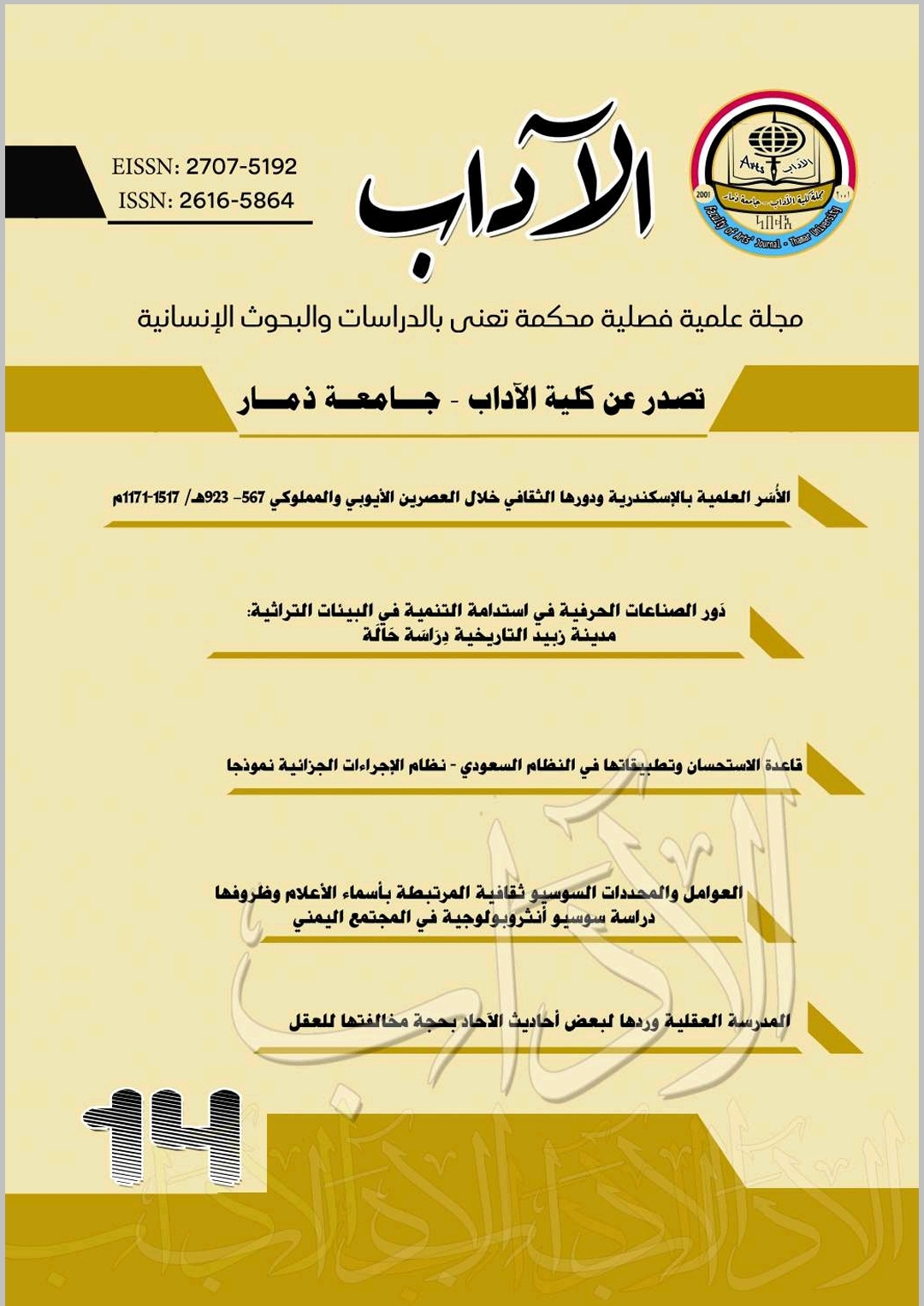
The Role of Handicraft Industries in the Sustainability of Development in Heritage Environments: Historical Town of Zabid as a Case Study
DOI:
https://doi.org/10.35696/.v1i14.640Keywords:
Handicraft, Heritage Environments, Sustainable Development, Historic Town of ZabidAbstract
Handicraft is considred as one of the most important elements of the cultural heritage that have wide interest, and there are increasing efforts to develop on national, regional and international levels. It is because of their importance in the economic, social and cultural development, it occupies as a part of the national heritage and to promote the humanity development. Some states are working on developing crafts and traditional industries; because the importance of their products to attract tourists, increase their numbers, and supporting the tourism activity. In addition, they support the national economy, improve the situation, and enhance social welfare. As well as its contribution in the preservation of heritage environments, safety from pollution, to enhance GDP, creating job opportunities, guaranteed income, and capital formation in ways that are active, and make profits to communities, in addition to its main role in the construction of human, and national identity. This paper seeks through the descriptive analytical approach to shed light on the fact development of Handicraft in the Historic Town of Zabid, Yemen, and evaluate its role in sustainable development, the challenges faced, and then developed a proposed strategy contribute to the strengthening of the role of the Handicraft industries, in accordance with the principle of sustainable development, in the framework of achieving social justice, economic development, and preserve heritage resources and national identity.Downloads
Download data is not yet available.
Downloads
Published
2020-03-01
Issue
Section
1
License
Copyright (c) 2021 ياسر هاشم عماد الهياجي (مؤلف)

This work is licensed under a Creative Commons Attribution 4.0 International License.
Copyright and Licensing
For all articles published in journal, copyright is retained by the authors. Articles are licensed under an open access Creative Commons CC BY 4.0 license, meaning that anyone may download and read the paper for free. In addition, the article may be reused and quoted provided that the original published version is cited. These conditions allow for maximum use and exposure of the work.
How to Cite
Al-hiagi, Y. H. E. . (2020). The Role of Handicraft Industries in the Sustainability of Development in Heritage Environments: Historical Town of Zabid as a Case Study. Arts, 1(14), 101-129. https://doi.org/10.35696/.v1i14.640